Introduction: The Problem With Classes
For decades, tabletop RPGs have relied on character classes, but more players are beginning to ask whether there are better alternatives, including systems built around paths instead of classes. The idea is simple and immediately understandable: if you want to fight, choose a fighter. If you want to cast spells, choose a wizard. If stealth, trickery, and agility appeal to you, pick the rogue. Classes provide structure, identity, and a clear mechanical role within a party. There is a reason the system has endured for so long. It works, especially for new players trying to understand who their character is supposed to be and what they are expected to contribute to the story.
Yet for all the strengths classes bring to roleplaying games, they also quietly shape character identity in ways many players stop noticing after years of play. The moment you choose a class, a large portion of your character’s future is often decided before the story even begins. Your progression path becomes partially scripted. Certain abilities become available while others remain closed off. Even in games that allow multiclassing or specialization, the assumption usually remains the same: first, you decide what your character is, then the system determines how that identity develops.
That structure is not inherently bad. Some players enjoy the clarity. There is comfort in knowing your role in the group and having clearly defined mechanical progression. Classes help maintain balance, reinforce archetypes, and give players recognizable fantasy identities. The heavily armored knight, the wandering ranger, the arcane scholar, the silver-tongued bard, these are familiar for a reason. They resonate.
But there is another question worth asking.
What happens when a character changes?
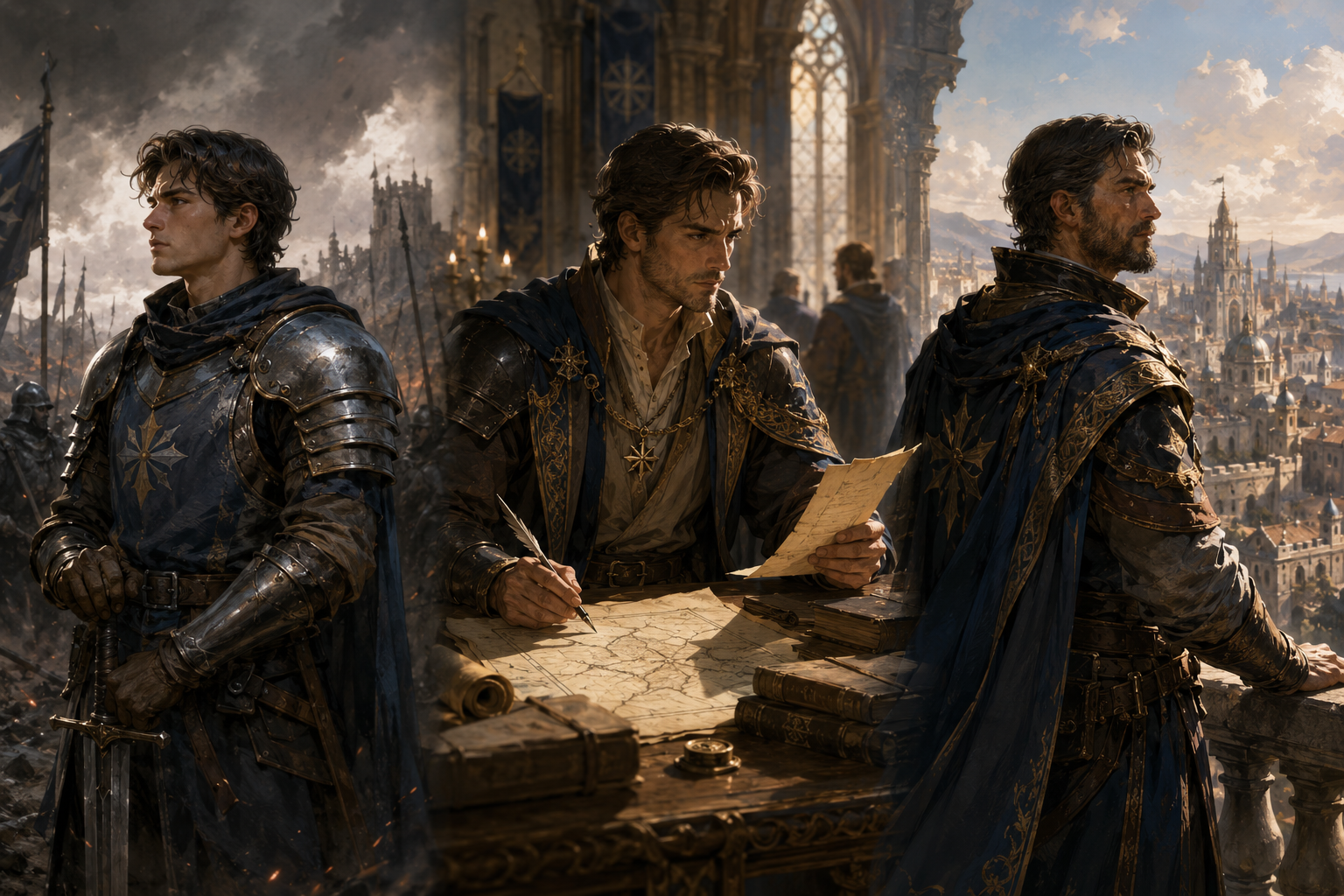
Not in the mechanical sense of gaining levels or unlocking stronger abilities, but in the human sense. What happens when a soldier spends years negotiating peace treaties and becomes a skilled diplomat? What happens when a scholar survives enough dangerous expeditions to develop the instincts of an explorer? What happens when a thief is forced into leadership, responsibility, and politics until they become something far more complicated than the role they started with?
In many traditional systems, those changes exist primarily in roleplay while mechanics struggle to keep pace. The story says one thing, but the sheet says another.
Legends of Thaloranth approaches character identity differently.
Building on the same player-choice philosophy discussed in Why Diceless RPGs Work.
Instead of classes, the game uses Paths, systems of specialized growth that reflect who a character is becoming rather than who they were expected to be from the start. Your character is not locked into a predefined lane. Growth emerges through investment, experience, and the consequences of the choices made during play.
Because in life, and in good stories, people rarely remain the person they were at the beginning.
What Traditional RPG Classes Get Right
Classes Provide Immediate Clarity
There is a reason character classes have remained one of the dominant approaches to tabletop RPG design for decades: they solve several real problems exceptionally well.
At their best, classes provide immediate clarity.
A new player sitting down at the table can usually understand their role within minutes. A fighter fights. A rogue sneaks. A wizard studies magic. A cleric heals or channels divine power. Even someone completely new to tabletop roleplaying can quickly grasp what their character is meant to do and how they contribute to the group. That kind of accessibility matters, particularly in games designed to bring large numbers of players into the hobby.
This clarity does something important at the table. It reduces friction. Instead of staring at dozens of mechanical options and wondering where to begin, players can immediately start imagining who their character is and how they interact with the world. In many ways, classes act as an entry point into roleplaying itself.
For new players especially, that simplicity can be invaluable.
Classes Reinforce Powerful Fantasy Archetypes
Part of the appeal of tabletop roleplaying games is stepping into identities that feel larger than life.
The wandering ranger surviving at the edge of civilization. The armored knight holding the line against overwhelming odds. The mysterious scholar commanding dangerous magical forces few truly understand. These archetypes resonate because they connect to stories people already know and enjoy. Literature, mythology, films, and fantasy fiction have reinforced these identities for generations.
Character classes provide a framework that helps players step quickly into those fantasy roles.
Rather than building identity entirely from scratch, classes offer recognizable foundations. Players know roughly what it means to be a paladin, a thief, a bard, or a wizard before the first session even begins. That familiarity creates confidence, especially in games where teamwork and party composition matter.
There is value in that kind of structure.
Structured Progression Feels Rewarding
Classes also solve an important mechanical challenge: progression.
In most class-based systems, advancement follows a clear path. Players understand where they are headed and what kinds of abilities they can expect to gain over time. The system answers many questions automatically. What abilities improve? What role becomes stronger? What new options become available?
For many players, this predictability feels satisfying.
There is comfort in knowing that advancement carries a sense of direction. Instead of wondering whether every mechanical choice is optimal, players can relax into a progression framework designed to support a specific fantasy identity. The heavily armored warrior becomes more resilient. The spellcaster gains access to increasingly powerful magic. The rogue becomes more capable, elusive, and dangerous.
That progression can feel intuitive because it aligns with player expectations.
Modern RPGs Already Recognized the Problem
To be fair, game designers have not ignored the limitations of rigid class systems.
Many modern RPGs introduced subclasses, prestige systems, talent trees, multiclassing, and hybrid advancement because designers recognized something important: people change. Characters evolve. Stories rarely move in straight lines.
A soldier might become a leader. A criminal might become a revolutionary. A scholar may survive enough hardship to become something harder, wiser, and more dangerous than they were at the beginning.
These systems emerged because players increasingly wanted characters that felt more layered and reflective of actual play experiences rather than static identities locked in place from session one.
And that raises an important question.
If character growth matters, should identity be decided at the beginning of the story?
Or should it emerge from the story itself?
The Hidden Limitation of Character Classes
For all the strengths classes bring to tabletop RPGs, they also carry a limitation that many players eventually begin to feel, especially during long campaigns.
Most class systems assume that the most important decision about your character happens before the story truly begins.
At character creation, you choose who your character is. From that moment forward, much of the system quietly reinforces that choice. Advancement expands your capabilities, certainly, but it often does so inside boundaries established during the opening hour of play. You become a stronger version of what you already were. More powerful. More specialized. More efficient.
But not necessarily more changed.
When Story and Mechanics Stop Matching
That distinction matters more than it first appears.
Character Growth Often Becomes Mechanical Rather Than Personal
In real stories, people change because circumstances force them to.
War changes people. Responsibility changes people. Loss changes people. Relationships change people. Survival changes people.
The idealistic young soldier who believed combat would be glorious may become cautious, politically aware, and deeply invested in protecting others after surviving years of hardship. The isolated scholar who once preferred books to people may develop leadership instincts after repeatedly being forced to guide others through danger. The criminal surviving through deception may discover that protecting people matters more than profit and gradually become something closer to a guardian than a thief.
Stories transform people.
Yet in many traditional class systems, those transformations exist primarily in roleplay while mechanics struggle to reflect them naturally.
The story says one thing.
The character sheet says another.
A fighter who becomes a skilled diplomat through years of political negotiation is still mechanically a fighter unless the player bends the system through awkward multiclassing, feat selections, or optional specialization systems. A rogue who gradually assumes command responsibility might still mechanically function almost identically to the character they were ten sessions earlier despite becoming someone entirely different in the narrative.
The disconnect is subtle at first.
Over time, however, many players begin to feel it.
Multiclassing Solves Part of the Problem, But Not All of It
To be fair, many systems recognized this tension and introduced solutions.
Multiclassing exists because players wanted characters who felt more flexible. Prestige classes emerged because designers wanted advancement to feel more earned and story-driven. Talent systems, subclasses, and hybrid progression models all represent attempts to solve the same underlying issue:
How do we allow characters to grow beyond the assumptions established at level one?
These systems absolutely help.
A fighter can take levels in bard. A wizard can become more combat capable. A rogue can diversify into leadership or magical disciplines. Compared to older rigid systems, these approaches offer significantly more flexibility.
But even then, many systems still frame identity in additive terms.
You are not fundamentally changed.
You are often still:
a fighter with rogue elements
or
a wizard with combat training
rather than a character whose identity genuinely evolved through lived experience.
The original framework remains the foundation, and growth frequently feels like attaching new pieces onto an already established role rather than allowing identity itself to emerge through play.
Stories Rarely Follow Straight Lines
Why Long Campaigns Expose the Problem
This becomes especially noticeable in long campaigns.
Very few memorable characters remain emotionally or philosophically identical to who they were at the beginning of a story.
Think about the best fantasy stories you have encountered. The people who matter most are rarely static archetypes. The reluctant hero becomes a leader. The cynical mercenary develops loyalty. The sheltered academic becomes hardened through travel, danger, and responsibility.
Good stories are rarely about people becoming stronger versions of themselves.
They are often about people becoming different versions of themselves.
And when mechanics reinforce transformation rather than resist it, character progression begins to feel less like unlocking abilities and more like living through experiences that leave lasting marks on who someone becomes.
The Real Question Is About Identity
This is ultimately the question underneath the entire discussion.
Should a roleplaying game decide who your character is before the story begins?
Or should the story itself shape who your character becomes?
That question sits at the center of how Legends of Thaloranth approaches character identity.
Because instead of asking players to choose a rigid role at the start and remain largely inside it, the system begins from a different assumption:
People evolve.
And good character systems should evolve with them.
Paths Instead of Classes in Legends of Thaloranth
The fundamental difference between Legends of Thaloranth and traditional class-based systems begins with a different assumption about how people grow. In many tabletop RPGs, a character’s identity is largely established before the first session begins. You choose a class, determine your role, and begin advancing along a progression path that expands the abilities associated with that choice. Even in systems with subclasses or multiclassing, the starting identity usually remains the central organizing principle of character development.
If you are new to the system, What Is Legends of Thaloranth? provides a broader overview of how the game approaches character agency, tactical choices, and progression.
Legends of Thaloranth approaches the question from another direction.
Instead of beginning with rigid classes, the system uses Paths, broad directions of growth that reflect where a character invests their focus, training, experience, and personal development. This is not simply a matter of replacing one word with another. Paths are designed to answer an entirely different question.
Traditional classes often ask:
What role does your character fill?
Paths ask:
Who is your character becoming?
That distinction matters because human beings rarely remain unchanged by experience. A soldier who spends years negotiating fragile political alliances does not remain exactly the same person they were when they first picked up a sword. A scholar forced to survive dangerous expeditions develops instincts and capabilities that life in a library could never teach. A criminal operating in the shadows may slowly become a protector, strategist, or leader as responsibilities grow and circumstances shift.
Legends of Thaloranth assumes this kind of transformation is not unusual. It assumes change is part of the story.
Skills Represent What You Learn
To understand why Paths function differently, it helps to begin with what they are not.
Paths are not skills.
In Legends of Thaloranth, skills represent developed competency. They reflect specific things a character has learned to do through practice, training, and repeated experience. Swordsmanship improves combat effectiveness. Rapport improves relationship-building. Arcane traditions deepen magical capability. Investigation sharpens the ability to uncover hidden truths. Skills answer a practical question: what is this character capable of doing in a given moment?
That distinction is important because capability alone does not fully explain identity.
Two characters might possess similar combat skills while being entirely different people. One fights with discipline and duty shaped by military service. Another fights out of necessity after years surviving dangerous streets. The practical capability may overlap, but the identity behind it does not.
Skills represent learned function.
They matter enormously, but they are only one layer of character development.
Paths Represent Who You Become
Paths exist at a broader level of identity.
The Player’s Guide explains the distinction clearly: skills represent what a character has learned to do, while Paths represent who that character is in the broader sense of specialized identity. Rather than focusing on isolated competencies, Paths reflect deeper commitments, priorities, philosophies, and directions of personal growth.
A Fighter Path does not simply mean someone knows how to swing a weapon. It reflects martial discipline, battlefield awareness, tactical thinking, and a life shaped by conflict. A Diplomat Path represents a person increasingly shaped by persuasion, negotiation, leadership, and social understanding. An Explorer Path reflects curiosity, adaptability, travel, and engagement with unfamiliar places and problems.
Most importantly, Paths are not exclusive.
Human beings are layered, and good stories tend to produce layered people. A knight who begins their journey focused entirely on combat may gradually develop diplomatic instincts after years spent navigating court politics. A scholar obsessed with ancient knowledge may become an explorer after surviving expeditions into forgotten ruins. A rogue surviving through selfish pragmatism may slowly evolve into someone capable of leadership because others begin depending on them.
In Legends of Thaloranth, the mechanics are designed to evolve alongside those changes rather than quietly resisting them.
Sub-Paths Create Specialization Without Restriction
Flexibility does not mean a lack of specialization.
One of the common concerns players have when hearing “classless system” is the fear that identity becomes vague or mechanically unfocused. Legends of Thaloranth avoids this problem through Sub-Paths, which allow meaningful specialization inside broader areas of development.
A Fighter may specialize through knightly discipline. A Diplomat may lean toward negotiation, strategy, or institutional influence. A Magus develops through the magical traditions and philosophies they choose to pursue. Characters still become highly capable in specific areas, and growth still feels distinct and earned.
The difference is that specialization exists inside an evolving identity rather than replacing it.
A character is not trapped inside the expectations of a single early decision. Instead, they continue growing in ways that reflect what the story has actually asked of them.
Character Identity Becomes Part of the Story
When progression works this way, the relationship between story and mechanics changes.
Instead of feeling like separate tracks running beside each other, narrative growth and mechanical growth begin reinforcing one another. The knight betrayed by their order naturally becomes more politically aware. The explorer obsessed with forgotten civilizations leans deeper into scholarship. The street thief who gradually takes responsibility for others develops leadership instincts that reshape who they are.
The result is something many players quietly want without always knowing how to describe it:
A character sheet that tells the same story the campaign is telling.
That shift is where Paths begin to feel fundamentally different from traditional class systems, because growth no longer feels like unlocking the next feature on a predetermined track. It feels like becoming someone shaped by experience.
Why Insight Shapes Character Growth
One of the most important differences between Legends of Thaloranth and traditional progression systems is that character growth is not simply about accumulating power. Advancement is not built around reaching a predetermined level and unlocking the next expected ability on a progression ladder. Instead, growth reflects expanding perspective, increasing sophistication, and the ways experience broadens who a person is capable of becoming.
This same philosophy of meaningful tradeoffs also appears in the game’s Action Point system, where choices carry real consequences rather than relying on randomness alone.
At the center of this philosophy sits a single stat:
Insight.
In Legends of Thaloranth, Insight does far more than govern intellectual or magical capability. It represents awareness, adaptability, perception, understanding, and the broader ability to engage with increasingly complex ways of living and thinking. It shapes magical depth, social sophistication, and personal development all at once. Because of this, Insight also determines one of the most important aspects of character growth:
How many Paths and Sub-Paths a character can pursue.
Growth Through Expansion Rather Than Replacement
In many traditional RPG systems, advancement often reinforces an existing identity. A fighter becomes more effective at fighting. A wizard gains stronger spells. A rogue becomes more dangerous or elusive. The progression usually deepens what already exists rather than expanding into entirely new directions.
Legends of Thaloranth takes a different approach.
More Insight Means More Possibility
Your Insight score equals the number of Paths and Sub-Paths available to you. A character with Insight 1 has one Path and one Sub-Path. A character with Insight 3 can pursue three Paths and three Sub-Paths, distributing them according to how the story has shaped their growth.
That design choice matters because it changes the feeling of progression.
Growth becomes less about replacing an earlier version of yourself and more about becoming increasingly layered.
A character does not abandon what they once were.
They build upon it.
The young knight who begins entirely focused on martial discipline may later add leadership after years commanding soldiers. Political necessity may push them toward diplomacy. Experience may force them to become someone capable of negotiation rather than violence. None of those developments erase the original identity. They deepen it.
The result feels closer to how people actually grow.
Insight Reflects Personal Evolution
The relationship between Insight and Paths is not arbitrary.
The Player’s Guide makes clear that new Paths and Sub-Paths become available only when Insight increases. Raising Insight immediately unlocks additional developmental directions, allowing a character to pursue new areas of specialization that reflect who they have become through play.
This philosophy carries an important implication:
A character becomes capable of pursuing more complex identities because they themselves have become more complex.
Someone with limited life experience often sees the world in narrower ways. Their identity is more concentrated, their perspective smaller, their priorities simpler. As people encounter hardship, responsibility, failure, discovery, politics, love, betrayal, survival, and success, they often become capable of understanding situations from multiple perspectives at once.
Legends of Thaloranth builds that reality directly into progression.
A more insightful person becomes capable of broader development.
Not because the rules arbitrarily say so, but because lived experience expands possibility.
Characters Are Allowed to Begin Incomplete
Why Beginning Incomplete Matters
One of the most fascinating consequences of this design is that characters are not required to arrive at the story fully formed.
In many systems, character creation pressures players to decide everything immediately. What class am I? What specialization am I pursuing? What does my final build look like?
Legends of Thaloranth allows a different possibility.
A character can even begin with Insight 0, meaning no Paths or Sub-Paths at all. Far from being a failure state, this represents someone who arrives at the story with broad foundational capability but no clear direction yet. They are still figuring out who they are and where life is taking them.
That possibility opens an unusual but powerful kind of storytelling.
Instead of optimizing identity before session one, players are free to discover identity through the events of the campaign itself.
The story stops being something that happens to a finished character.
It becomes the thing that shapes who that character ultimately becomes.
Progression Starts Feeling Human
This is ultimately why Insight changes the feeling of advancement.
Progression no longer feels like climbing a mechanical ladder toward a predetermined endpoint. Instead, it feels more like watching a person slowly become more layered, capable, and shaped by the world around them.
The fighter who survives politics becomes more diplomatic.
The scholar who survives expeditions becomes more practical.
The thief forced into responsibility becomes more of a leader.
And because the mechanics evolve alongside those experiences, the character sheet begins reflecting the same growth the story has already been telling.
Prestigious Paths: Recognition, Not Unlocks
One of the most common patterns in traditional roleplaying games is the idea of advancement through mechanical unlocking. Reach the required level, meet a list of prerequisites, and the system grants access to a new specialization. Prestige classes, elite subclasses, advanced careers, and mastery systems all tend to follow a similar philosophy:
You qualified for the reward.
There is nothing inherently wrong with that approach. In fact, prestige systems often represent one of the strongest attempts traditional RPGs have made to create advancement that feels earned rather than automatic. Players enjoy the sense of achievement that comes from reaching difficult requirements and unlocking something distinctive. Older RPGs experimented with prestige-style systems as a way of making advancement feel more earned.
Yet even here, Legends of Thaloranth approaches the idea differently.
In LoT, a Prestigious Path is not something a character unlocks.
It is something the world recognizes.
That distinction may sound small on paper, but in actual play it changes the emotional weight of progression dramatically.
Prestigious Paths Build Upon Who You Already Are
The first important difference is structural.
Prestigious Paths do not replace a character’s existing Paths. They sit on top of them.
The Game Master’s Guide makes this philosophy explicit: a character who earns the Azure Knight Prestigious Path does not stop being a Fighter. Everything they have already developed through earlier Path investment remains intact. The Prestigious Path adds another layer of capability and identity rather than discarding what came before.
This matters because it mirrors how recognition works in life.
A military officer promoted into higher responsibility does not stop being a soldier. A scholar accepted into an elite institution does not stop being a researcher. A diplomat entrusted with political authority does not abandon everything that brought them to that point.
Recognition expands identity.
It does not overwrite it.
The character who becomes an Azure Knight remains the person who survived hardship, learned discipline, earned trust, and proved themselves worthy of greater responsibility. The title matters precisely because of everything that came before it.
Institutions Respond to Character Growth
Prestigious Paths also reflect one of the deeper themes inside Legends of Thaloranth:
The world notices what characters become.
According to the GMG, Prestigious Paths are institutional recognitions whose mechanics are intentionally managed from the Game Master’s side of the table because they represent relationships with organizations, orders, and structures larger than the individual character.
That distinction changes how advancement feels.
A character does not simply wake up one morning and declare:
“I am now elite.”
Instead, institutions react.
The Order of the Azure Star recognizes a knight who consistently embodies its values. The White Tower acknowledges scholarship, discipline, and demonstrated magical capability. The Shadow Hand extends trust only after someone proves they possess not just skill, but judgment worthy of deeper access.
These moments stop feeling like mechanical upgrades.
They begin feeling like consequences of the story.
Recognition Carries Responsibility
Another important difference is that Prestigious Paths are not passive rewards.
Membership means something.
The Game Master’s Guide emphasizes that these Paths represent ongoing relationships with living institutions that possess expectations, priorities, obligations, and resources of their own. A character gaining access to an elite order also gains responsibilities to that order. Prestige creates opportunities, but it also creates pressure.
This makes advancement feel more human and more narratively meaningful.
Becoming recognized by an institution changes how the world interacts with a character. Doors open that were once closed. Information becomes accessible. Reputation grows. Expectations rise. Allies appear, but obligations appear alongside them.
The reward becomes larger than numbers on a character sheet.
It becomes a new relationship with the world itself.
Character Growth Becomes a Story Moment
Perhaps most importantly, Prestigious Paths are designed to feel memorable.
The GMG explicitly frames earning one as a character moment, not a mechanical transaction. The session where a knight receives recognition from the Azure Star, where a scholar is accepted into the White Tower’s hierarchy, or where an operative is trusted with the Shadow Hand’s deeper network should feel significant at the table. These are moments where the world effectively says:
We see who you have become.
That idea sits at the heart of the entire progression philosophy of Legends of Thaloranth.
Growth is not merely accumulation.
It is transformation.
And meaningful transformation should leave marks on the world around you.
Progression Stops Feeling Transactional
When progression works this way, advancement begins to feel less like checking boxes and more like living through experiences that matter.
The player is no longer chasing the next mechanical reward simply because a chart says it is time.
Instead, they are becoming someone whose actions, decisions, reputation, and identity eventually reshape how the world responds to them.
That shift changes progression from:
“What ability do I get next?”
to:
“Who have I become, and what does the world now expect of me?”
And that is a very different kind of roleplaying experience.
Final Thoughts: The Character You Become Matters
At the heart of the discussion about classes, Paths, and progression is a surprisingly simple question:
What should character growth actually represent?
For many traditional roleplaying games, progression primarily reflects increasing capability. Characters become stronger, tougher, more specialized, or more efficient within the role they chose at the beginning of the story. There is genuine value in that approach. Clear identity, recognizable archetypes, and structured advancement have helped tabletop roleplaying games thrive for decades.
But capability alone does not always tell the whole story.
People are shaped by experience.
Responsibility changes people. Hardship changes people. Relationships change people. Success changes people. Failure changes people. The person who begins a journey is rarely the same person standing at its end, and some of the most memorable stories in fantasy are memorable precisely because of that transformation.
The reluctant warrior becomes a leader. The sheltered scholar develops courage. The selfish opportunist slowly discovers loyalty. The idealist becomes wiser, harder, or perhaps even more hopeful after surviving the things they once feared.
Growth matters because change matters.
That is the philosophy sitting underneath Legends of Thaloranth.
Character growth in Legends of Thaloranth also unfolds through a scene-based structure rather than rigid turn cycles, something explored more deeply in Scenes, Not Rounds.
Instead of asking players to decide everything about identity before session one, the system assumes that people evolve. Paths allow characters to grow in ways that reflect lived experience. Insight expands possibility rather than reinforcing limitation. Prestigious Paths allow the world itself to recognize meaningful transformation rather than simply rewarding mechanical optimization.
The result is not a rejection of progression.
If anything, it is a deeper commitment to it.
Characters still specialize. They still become highly capable. Choices still matter mechanically. The difference is that progression becomes connected to the story unfolding at the table rather than existing beside it. Your character sheet stops feeling like a predetermined roadmap and starts feeling like a reflection of what your character has survived, learned, valued, and ultimately become.
Because in the end, the most memorable characters are rarely the ones who simply became stronger.
They are the ones who became different.
And in Legends of Thaloranth, that difference matters.
Continue Your Journey
Rather than locking characters into rigid classes, Legends of Thaloranth allows heroes to grow through flexible Paths that reflect their unique stories and choices. Explore the complete Path system, character options, and advancement rules in the Player’s Guide, and record your character’s journey with the Character Sheet Portfolio.
Leave a Reply