Tag: tabletop RPG
-
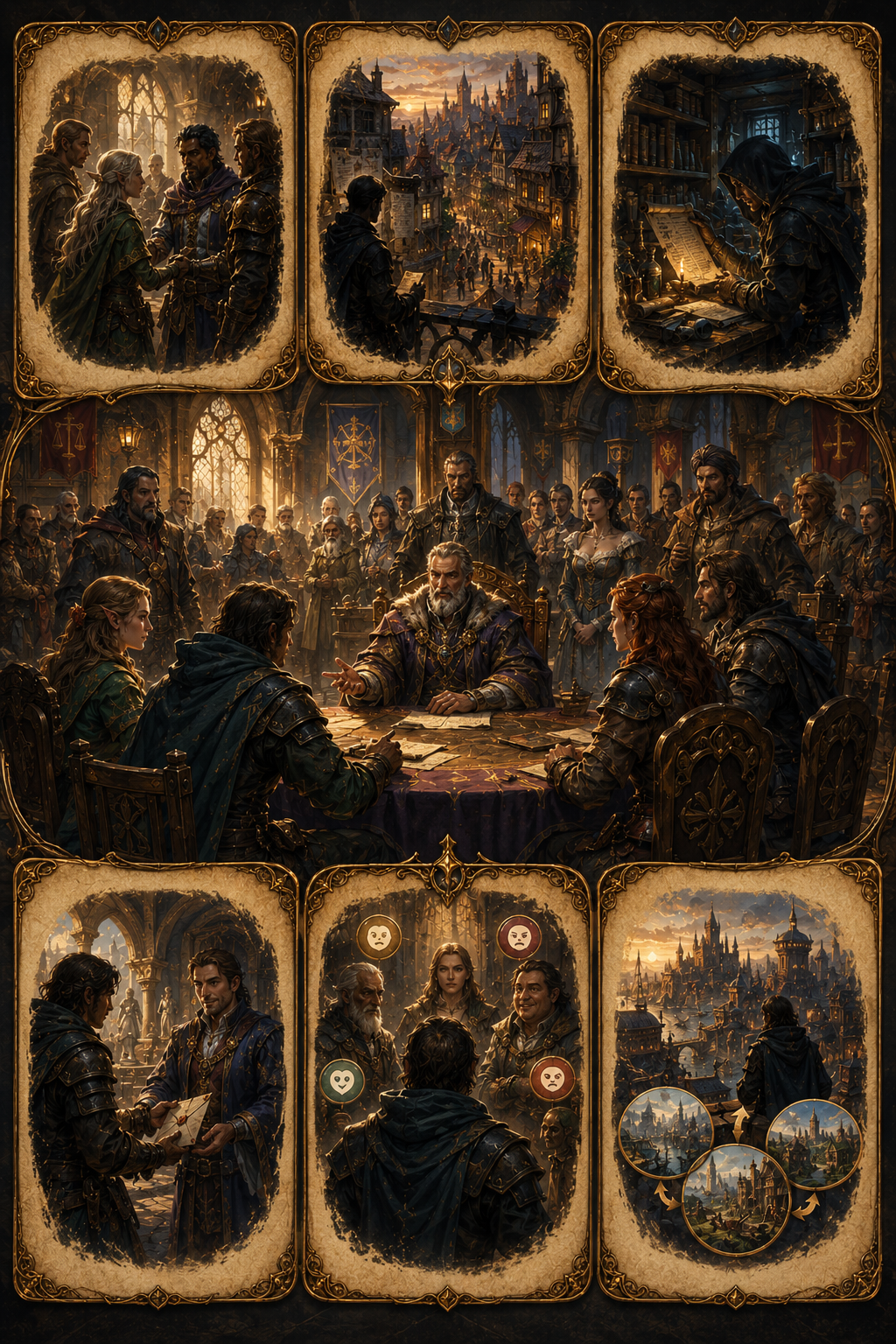
Social Encounters That Actually Matter in Legends of Thaloranth
Introduction Social encounters in Legends of Thaloranth occupy a unique place within the system because they reveal something fundamental about how the game approaches conflict. Many roleplaying games treat social interaction as a brief pause between adventures, a conversation that exists primarily to deliver information before the characters return to exploration or combat. In practice,…
-
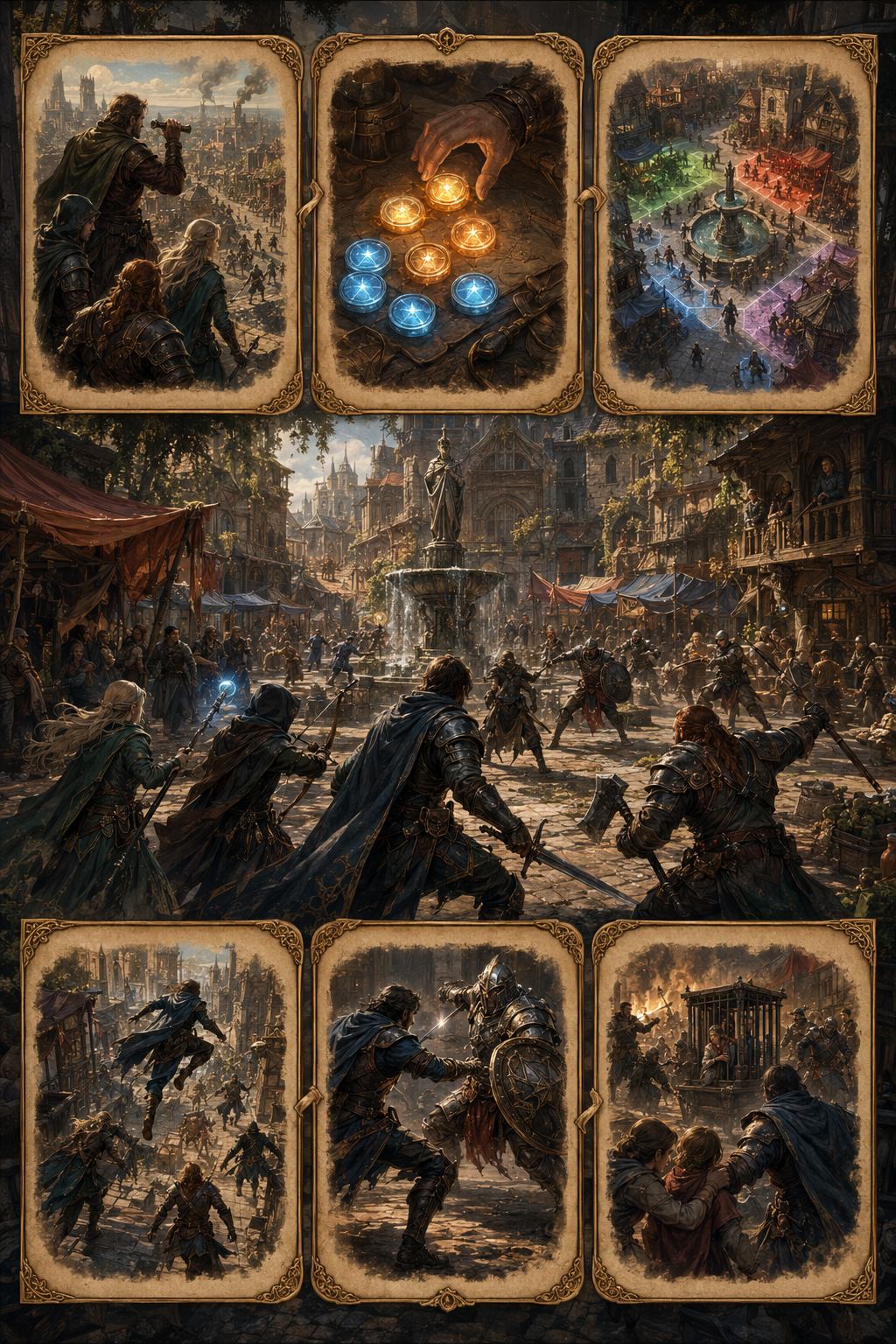
How Combat in Legends of Thaloranth Flows
How Combat Flows in Legends of Thaloranth Combat in Legends of Thaloranth follows the same design philosophy that shapes every other part of the system. Rather than separating combat from the rest of the game, the rules focus on meaningful choices, meaningful consequences, and scene-based play. For most of a session, players engage with the…
-
What a Scene Looks Like in Legends of Thaloranth
What a Scene Looks Like in Legends of Thaloranth If you’ve spent any time reading the articles on this site, you’ve probably noticed that the word scene appears frequently. That isn’t an accident. Understanding what a scene looks like in Legends of Thaloranth is one of the fastest ways to understand how the entire game…
-
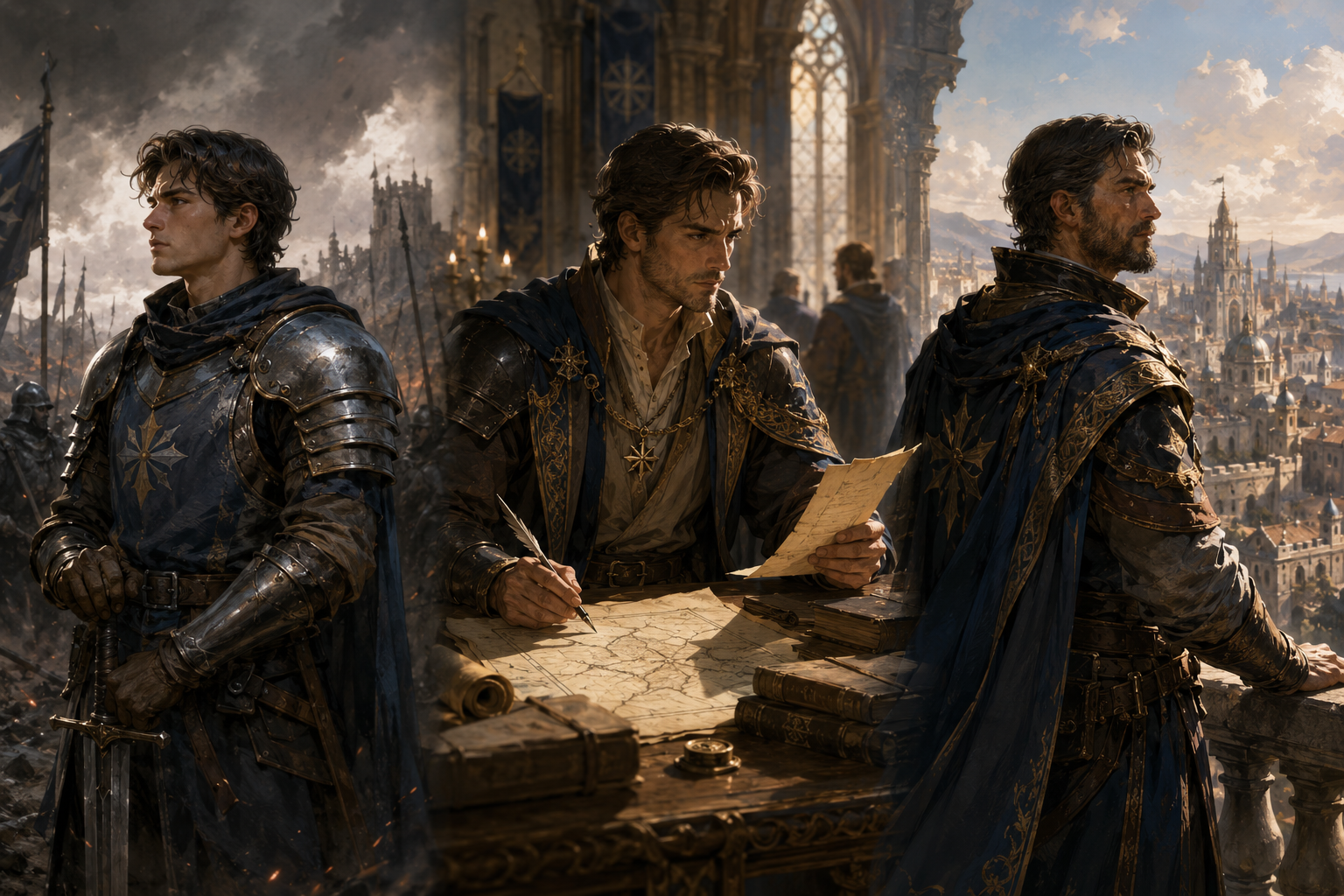
Paths Instead of Classes: A Better Way to Build RPG Characters
Introduction: The Problem With Classes For decades, tabletop RPGs have relied on character classes, but more players are beginning to ask whether there are better alternatives, including systems built around paths instead of classes. The idea is simple and immediately understandable: if you want to fight, choose a fighter. If you want to cast spells,…
-
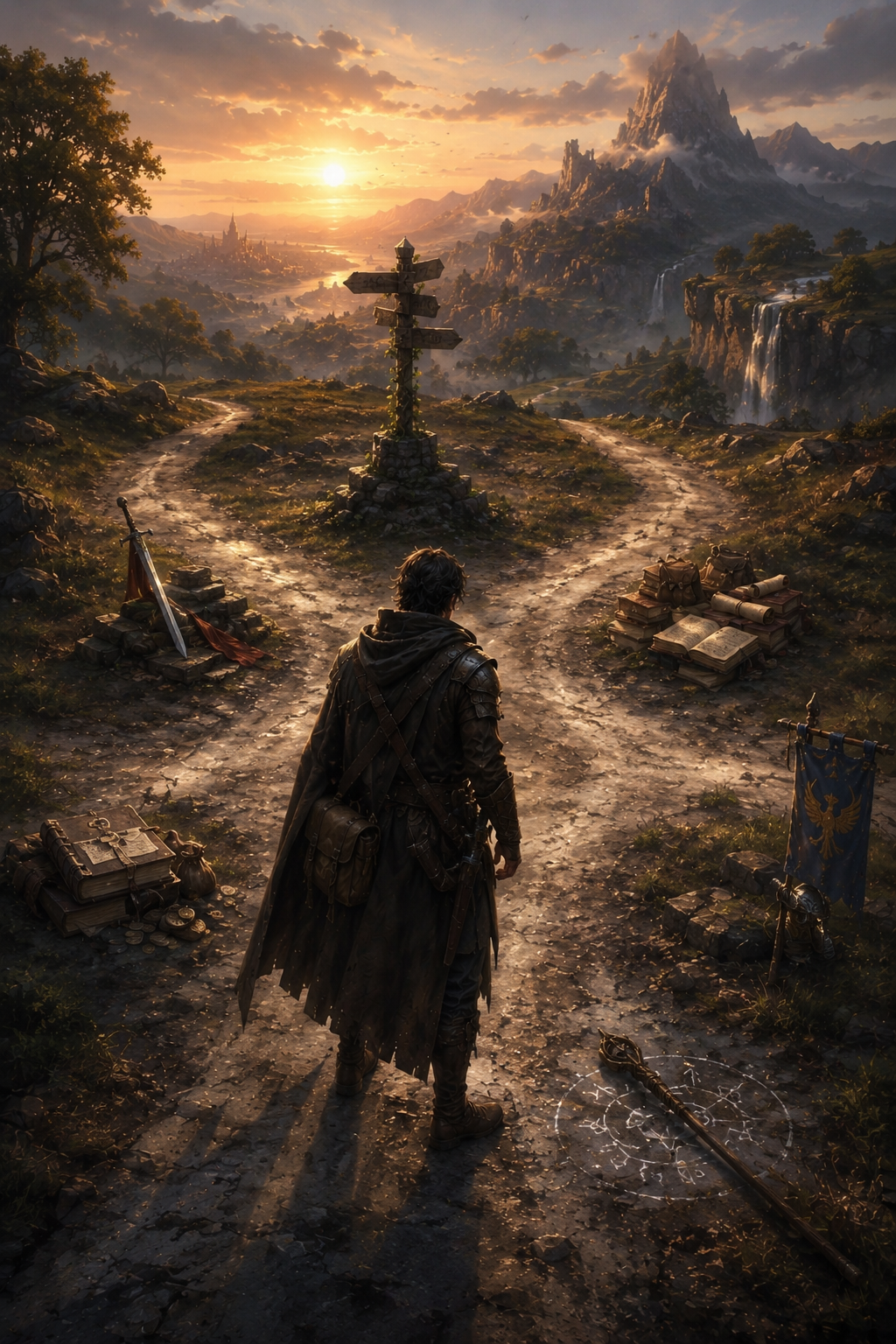
XP as Currency: Progression Without Levels
XP as Currency: Progression Without Levels What if character growth in tabletop RPGs wasn’t tied to levels? In Legends of Thaloranth, XP becomes a currency for meaningful, classless progression driven by player choice. Why Levels Became the Standard For decades, tabletop role-playing games have trained players to think about character growth in one specific way:…
-
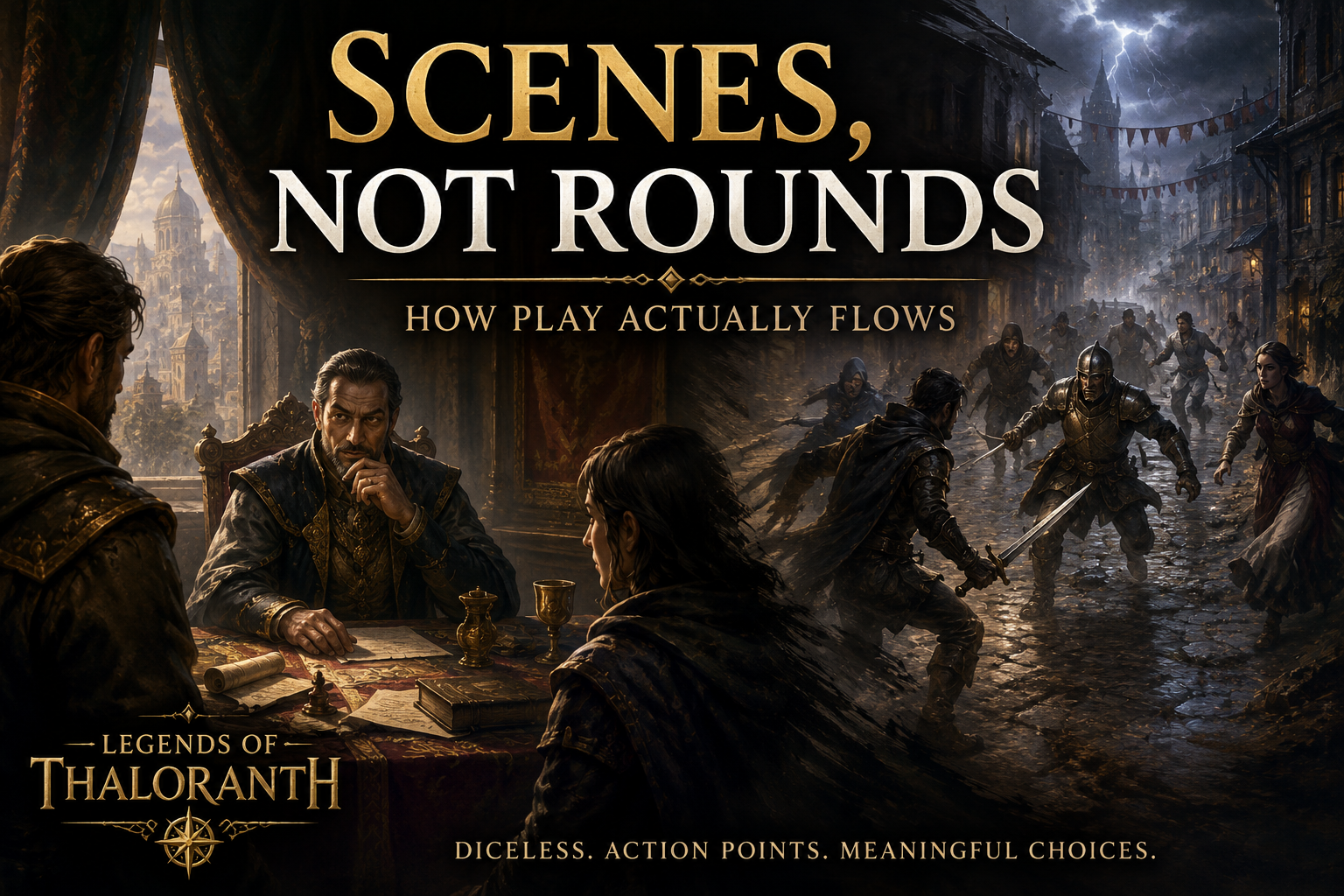
Scenes Not Rounds: How Play Actually Flows
The Problem With Rounds Most tabletop roleplaying games are built around rounds. Even when players are not consciously thinking about them, rounds quietly shape how a game feels, how tension develops, and ultimately, how play actually flows at the table. Scenes, not rounds, is one of the core philosophies behind Legends of Thaloranth, and the…
-
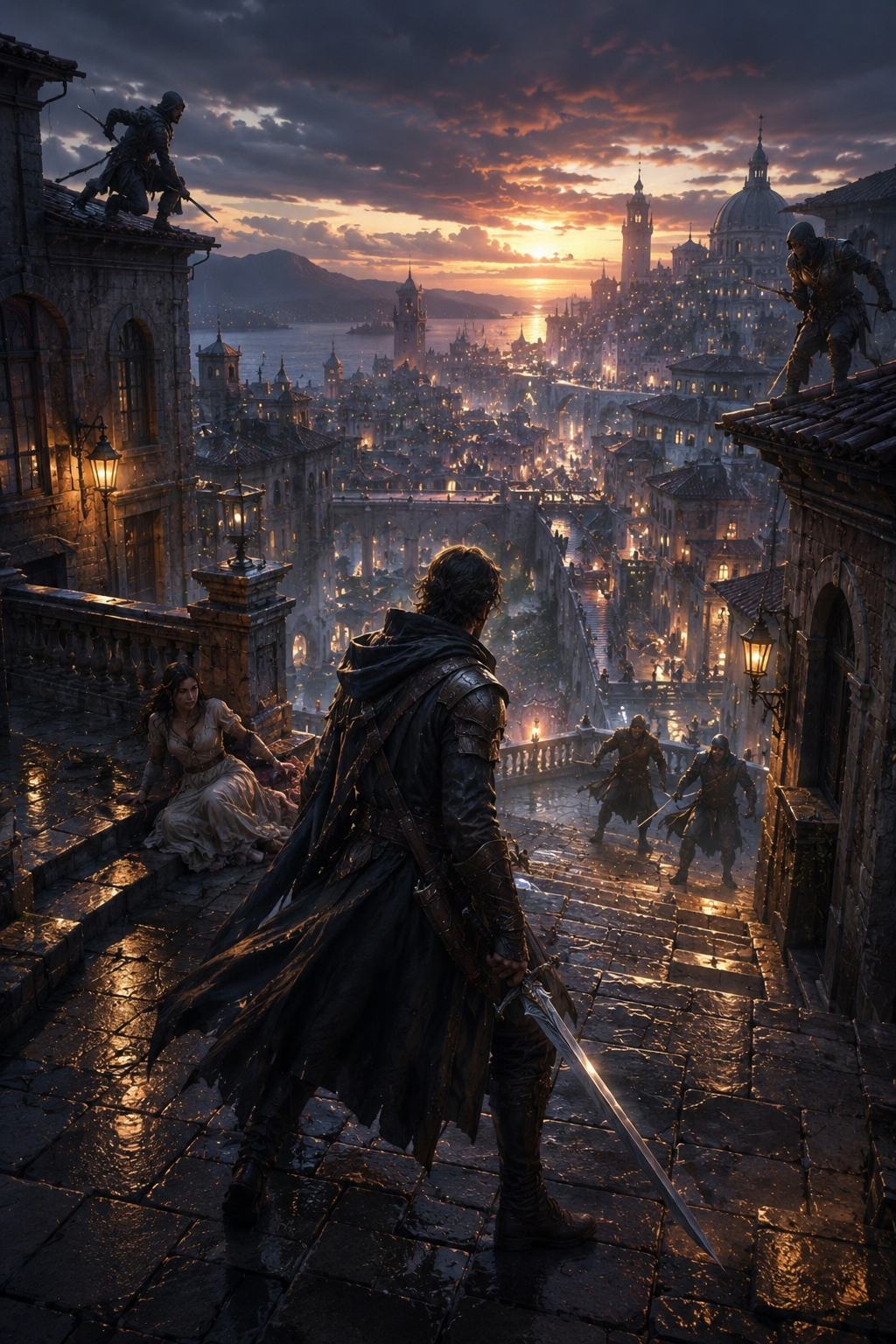
Action Points: The Core of Every Decision in Legends of Thaloranth
Every great game has one central mechanic that defines how it feels at the table. In chess, it’s positioning. In poker, it’s reading people and managing risk. In Legends of Thaloranth, that defining mechanic is Action Points. Action Points are not just a resource. They are the beating heart of the entire system, the place where…
-
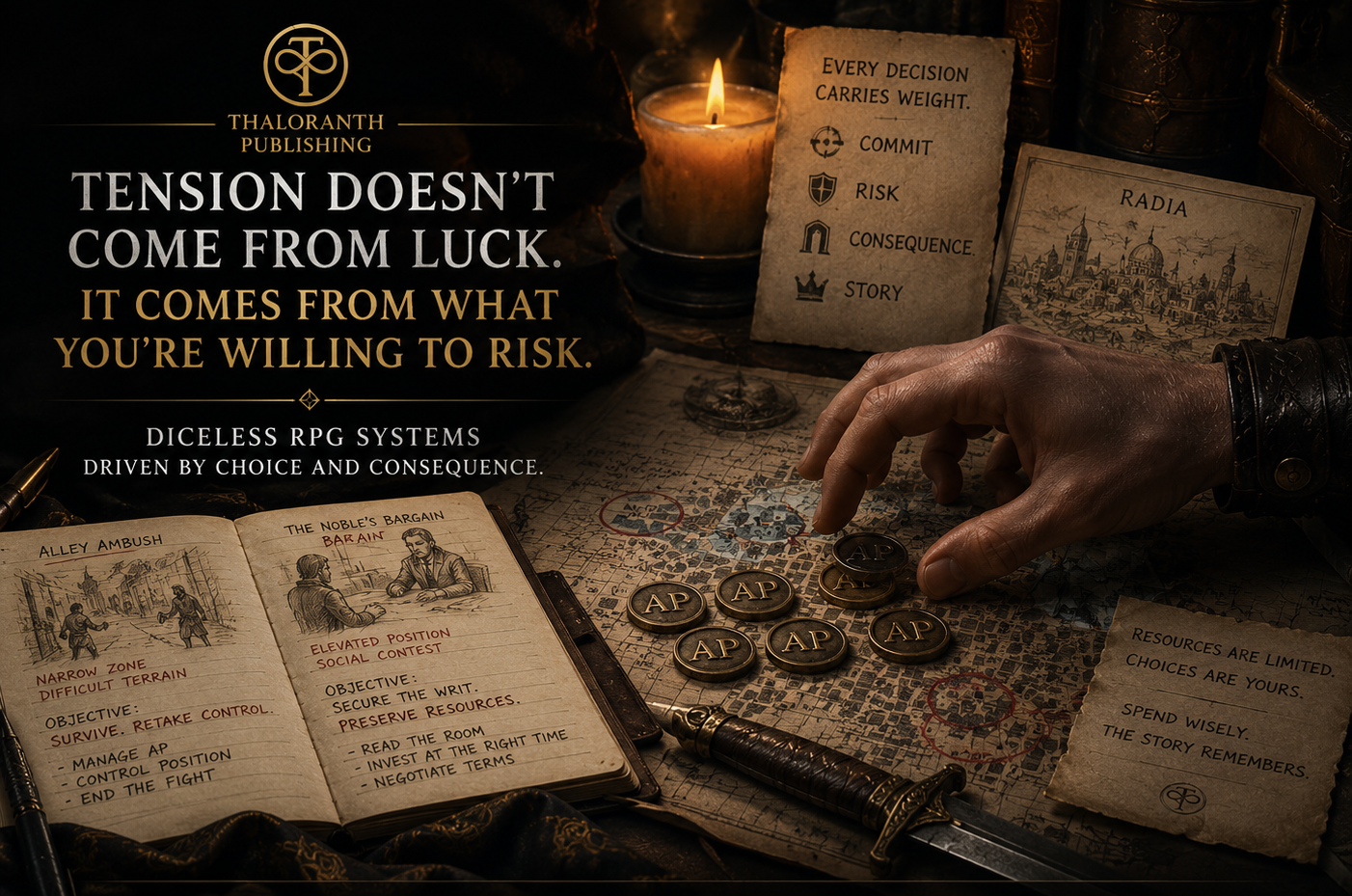
Why Diceless Tabletop RPGs Work
Most people believe diceless tabletop RPGs cannot create real tension. Remove the dice, they assume, and the game collapses, no tension, no uncertainty, no real excitement. One of the biggest misunderstandings surrounding diceless tabletop RPGs is the belief that removing randomness automatically removes excitement. In reality, the strongest diceless tabletop RPGs simply shift the source…
-

What Is Legends of Thaloranth?
Legends of Thaloranth is a diceless tabletop RPG built on one foundational principle: Every outcome is the result of a decision. No hoping the roll goes your way. Instead, the game runs on Action Points, scene-based structure, and deliberate player investment to create consistent, intentional, and deeply tactical play. This is not a…