XP as Currency: Progression Without Levels
What if character growth in tabletop RPGs wasn’t tied to levels? In Legends of Thaloranth, XP becomes a currency for meaningful, classless progression driven by player choice.
Why Levels Became the Standard
For decades, tabletop role-playing games have trained players to think about character growth in one specific way: levels.
You gain experience. You cross a threshold. Suddenly, everything changes.
A character wakes up stronger. Hardier. More capable. Sometimes dramatically so. New abilities appear. Numbers jump. Entire capabilities arrive because a chart says they do. In one session, the warrior struggles to survive a difficult fight. In the next, they somehow know techniques they did not know yesterday. A mage suddenly understands entirely new forms of magic. A rogue develops talents that, moments earlier, simply did not exist.
There is nothing inherently wrong with this approach. Level systems and traditional experience point systems have shaped tabletop gaming for generations because they work. They create anticipation. They provide structure. They give players something obvious to chase. There is satisfaction in finally hearing the words: You level up.
The Strange Logic of Sudden Growth
But they are not the only way to think about progression. That same idea sits behind my broader design philosophy for why diceless tabletop RPGs work, where outcomes come from preparation, investment, and choices rather than random chance.
The question worth asking is simple: Does character growth have to happen in sudden leaps?
Real growth rarely works that way. A soldier becomes dangerous through repetition, discipline, and hard lessons learned over time. A diplomat develops skills through difficult conversations, failed negotiations, and moments where saying the wrong thing carries consequences. A scholar grows through study, mistakes, obsession, and refinement. People do not wake up transformed because an invisible threshold was crossed. They become who they are through consistent choices.
That idea sits at the heart of Legends of Thaloranth.
Why XP as Currency Changes Character Growth
In Legends of Thaloranth, progression without levels is not a gimmick or an alternative rule tucked into the back of the book. It is one of the foundational philosophies of the system. Characters do not wait for permission to grow, nor do they spend sessions trapped in the strange limbo of “almost improving.” Advancement happens steadily, deliberately, and in ways that reflect who the character is becoming.
Experience points are not something you stockpile while waiting for a milestone.
They are currency.
That distinction changes everything. It also connects directly to the way Action Points sit at the core of every decision in Legends of Thaloranth, because advancement and resolution both ask the same question: what are you willing to invest?
Instead of saving toward a level that unlocks a predetermined package of abilities, players make choices. Every adventure matters because every reward matters. Improvement becomes immediate, tangible, and personal. A character can deepen a skill, strengthen an attribute, expand their path, improve their resources, or begin shaping themselves in an entirely new direction. Growth becomes less about following a progression chart and more about deciding who your character is becoming.
More importantly, no two characters evolve the same way.
Two warriors who begin in nearly identical places may look completely different after ten adventures. One may become a battlefield tactician, investing in leadership and strategic capability. Another may focus entirely on martial dominance, becoming frighteningly specialized in combat. Neither is wrong. Neither is following a prescribed destination.
They are becoming the result of their choices.
And in a diceless system built around preparation, resource management, and meaningful decisions, that matters more than most players realize.
Because in Legends of Thaloranth, progression is not something that happens to your character.
It is something you build.
Why Progression Without Levels Changes the Game
How Real Growth Actually Happens
There is nothing wrong with level-based progression. Tabletop role-playing games have relied on it for decades because it works. Levels create anticipation. They give players something tangible to chase and provide a clear sense of momentum. There is real satisfaction in finally crossing that invisible threshold and hearing the words: you level up. Suddenly, numbers improve, new abilities appear, and your character feels stronger, more capable, and more prepared for whatever comes next.
I understand the appeal. I have played those games for years.
But over time, I found myself asking a simple question: does meaningful growth actually happen that way?
Because when you stop and think about it, the model starts to feel a little strange. A veteran fighter does not wake up one morning suddenly capable of techniques they somehow could not perform yesterday. A diplomat does not instantly become persuasive because they crossed an invisible milestone after one more negotiation. A scholar does not go to bed with one body of knowledge and wake up mysteriously fluent in another. Most meaningful growth does not happen all at once. It happens gradually, shaped by repetition, mistakes, hard lessons, and the quiet accumulation of experience over time.
Why Waiting to Improve Feels Strange
That is where traditional progression sometimes feels disconnected from the story being told. Characters often spend long stretches of play waiting to improve. Experience accumulates in the background while the character remains mostly unchanged. Then, suddenly, everything happens at once. New abilities emerge. Statistics jump. Entire capabilities appear because the progression chart says the moment has arrived.
Again, there is nothing inherently wrong with that philosophy. Different systems are trying to create different experiences, and level-based games have earned their place for good reason.
But they are not the only way to think about meaningful character progression.
A Different Philosophy of Character Growth
When I started building Legends of Thaloranth, I kept returning to the same core idea: if the game is built around meaningful decisions, then character growth should be shaped by meaningful decisions too. Growth should feel connected to the choices a player makes, not delayed until some invisible threshold finally gives permission for improvement.
That is why Legends of Thaloranth uses progression without levels.
Because experience points are not something you collect while waiting for something to happen.
They are something you use.
They’re currency.
And that changes everything.
XP as Currency in Legends of Thaloranth
Why XP Exists to Be Used
In Legends of Thaloranth, experience points are not something you quietly collect in the background while waiting for the next major milestone. There is no moment where the system suddenly decides you are now powerful enough to become something new. No dramatic overnight transformation. No delayed reward where ten sessions pass before a character finally feels different.
Experience points exist to be used.
That distinction matters far more than it may seem at first glance.
In many RPG systems, experience serves one purpose: eventually reaching the next level. Everything between those moments often feels like waiting. The character may have survived impossible situations, learned painful lessons, developed new priorities, or changed dramatically as a person, but mechanically, they remain mostly frozen until the next threshold arrives.
How Progression Without Levels Reflects the Story
In Legends of Thaloranth, growth happens when the player decides it happens.
Complete an adventure, earn experience, and immediately begin asking an important question: What has this character learned?
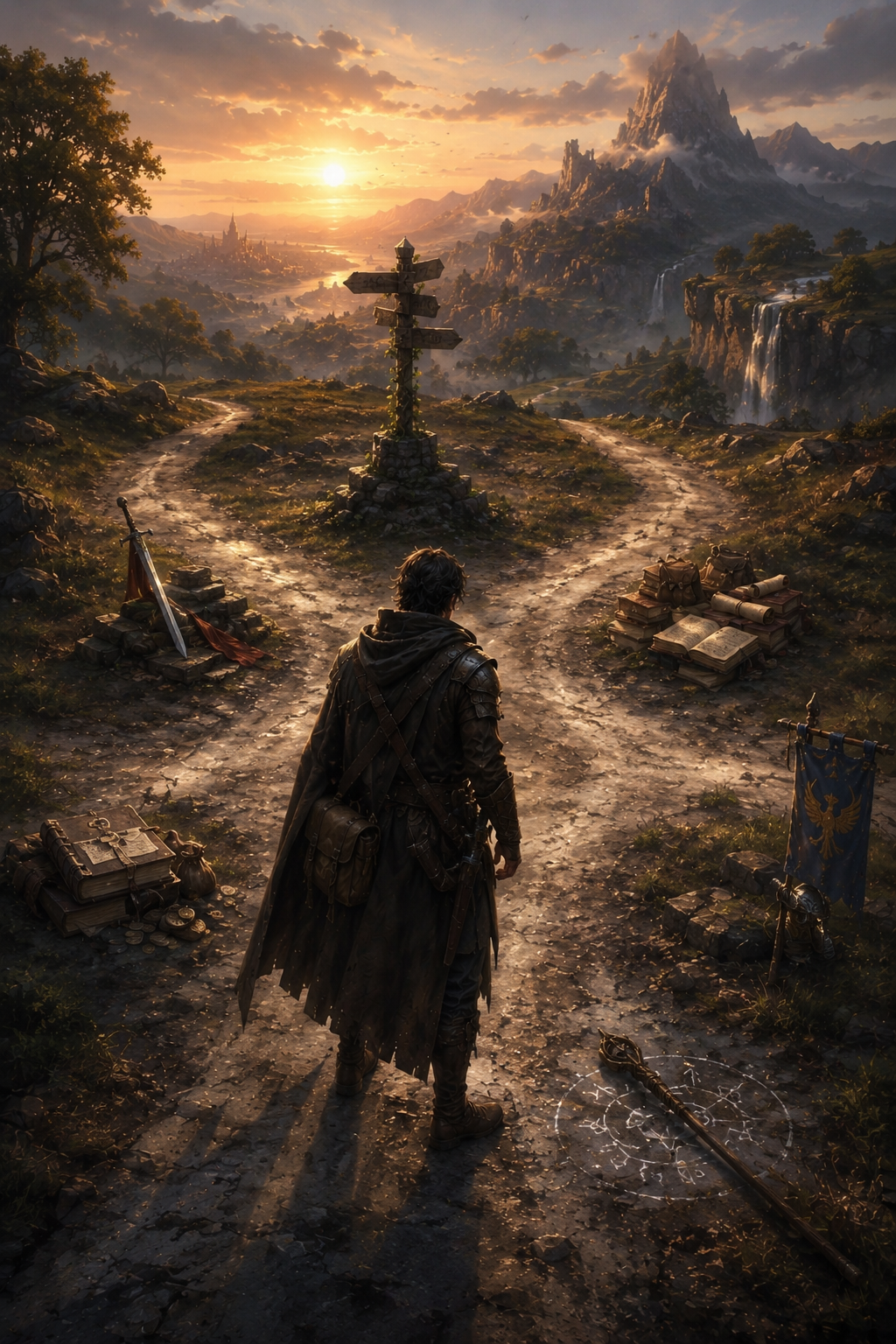
Maybe the warrior who barely survived three brutal encounters decides they need better combat training and improves their martial skill. Perhaps the noble who spent an entire adventure navigating tense negotiations realizes they need stronger social capability. A scholar who uncovered forgotten lore may deepen their understanding of magic or history. Sometimes growth comes from success. Sometimes it comes from failure. Often, it comes from necessity.
The important thing is that progression reflects the story.
Why Every XP Decision Matters
Mechanically, experience functions as currency. Skills increase at a cost of one XP per point. Core statistics require greater investment, costing three XP per point because changing the foundation of a character should matter. Path Points also cost three XP, allowing characters to deepen their focus or broaden who they are becoming. Advantages cost four XP, while even Wealth Points can improve over time as characters establish themselves in the world. With characters generally earning around seven XP per adventure, advancement becomes steady, visible, and meaningful without feeling disconnected from play.
More importantly, every decision carries weight.
Spend heavily improving combat and your character becomes dangerous quickly, but that same investment delays social influence, knowledge, leadership, or broader flexibility. Focus too widely and you become versatile, though perhaps slower to specialize. There is no universally correct answer because there is no prescribed path.
There are only priorities.
And over time, those priorities become identity.
How XP as Currency Creates Meaningful Character Progression
How Similar Characters Grow Apart
One of the things I appreciate most about using XP as currency is that small decisions start creating very big differences over time.
Two characters may begin in nearly the same place and end up feeling completely different after only a handful of adventures, not because a class progression forced them apart, but because the players made different choices about who those characters were becoming.
Imagine two fighters standing side by side at the start of a campaign. On paper, they may look remarkably similar. Similar backgrounds. Similar skills. Similar strengths. In many traditional systems, they may continue looking fairly similar for quite a while, especially if they share the same class or role.
But progression without levels changes that equation.
One fighter may begin investing heavily into combat capability, sharpening martial skills, increasing Power, and becoming frighteningly effective in direct conflict. Every experience point spent reinforces the same lesson: survival belongs to those who master violence.
The other may come away from the same adventures learning something entirely different. Perhaps they begin investing in Leadership after seeing what happens when a group lacks direction. Maybe Social improves because hard lessons taught them that half of winning a conflict happens before the first blade is drawn. Over time, that character starts becoming less of a warrior in the narrow sense and more of a commander, negotiator, or protector.
Neither character is wrong.
More importantly, neither character was told who they had to become.
Why Identity Emerges Through Investment
That difference matters.
In many games, progression feels predetermined. You choose a class, a specialization, or a build path, and much of your future is already mapped out. There may be choices along the way, but often they exist inside fairly narrow lanes. By level five, you know roughly what level ten looks like.
In Legends of Thaloranth, character advancement works differently because identity emerges through investment. A player is constantly making small decisions, and those decisions quietly shape the person the character is becoming. No single XP purchase transforms someone overnight, but over time the accumulation becomes impossible to ignore.
Character Growth Through Priorities
That feels more natural to me.
People rarely change all at once. Usually, they become who they are through repeated priorities, repeated struggles, and repeated decisions about what matters most.
Characters should feel the same way.
And because Legends of Thaloranth is built around meaningful choices, progression becomes another layer of decision-making rather than a reward waiting at the end of a long tunnel.
You are not simply advancing.
You’re building someone.
Why Meaningful Character Progression Requires Meaningful Tradeoffs
Why Choice Only Matters When Something Is Sacrificed
Choice only matters when something meaningful is being chosen.
That may sound obvious, but it sits at the center of what makes progression feel satisfying in a tabletop role-playing game.
If every character eventually gets everything, then the decision itself stops carrying much weight. It simply becomes a question of timing. Eventually, everyone reaches the same destination, even if they take slightly different roads to get there. One player gets there faster. Another gets there slower. But the path itself was mostly decided from the beginning.
That was never the experience I wanted Legends of Thaloranth to create.
Because growth becomes more meaningful when every improvement quietly asks a question:
What matters most right now?
What XP Spending Says About a Character
A character only has so much experience to spend after an adventure. Improving one area almost always means delaying another. Investing heavily into combat might make survival easier in dangerous situations, but it may also mean neglecting diplomacy, leadership, knowledge, or broader utility. Focusing on Social may open doors, influence powerful people, and avoid fights altogether, but perhaps at the cost of direct battlefield effectiveness. Investing in a Path may deepen specialization while delaying improvements to core attributes.
None of these are wrong decisions.
But they are decisions.
And that distinction matters.
A player who chooses to spend experience strengthening Persuasion instead of Combat is saying something about how they see their character solving problems. A player who invests into Leadership rather than raw personal capability is often shifting the character toward influence, responsibility, and the ability to shape events through others. Even increasing Wealth Points says something. It reflects someone building stability, resources, reputation, or long-term influence in the world.
The progression system quietly becomes part of the storytelling.
How Tradeoffs Shape Identity
What matters to a character begins showing up mechanically. Priorities become visible. Strengths become sharper. Weaknesses remain meaningful because players cannot simply improve everything all at once. Hard choices force identity to emerge naturally.
And in a diceless game, those choices carry even more weight.
Because numbers matter. A single point matters.
Improvement feels tangible because outcomes are shaped by preparation, investment, and resource management rather than chance alone. Players feel the difference when a skill improves. They see it when a difficult challenge suddenly becomes manageable because of deliberate investment made three adventures earlier.
That creates a very different relationship with progression.
You stop thinking in terms of “What level am I trying to reach?”
And start asking:
“Who is this character becoming?”
That is where progression without levels starts feeling less like an alternative mechanic and more like a different philosophy of play.
Why XP as Currency Works in a Diceless RPG
Why Small Improvements Matter More
The more I worked on Legends of Thaloranth, the more obvious something became to me:
A progression system built around meaningful investment only truly works if those investments actually feel meaningful at the table.
That may sound simple, but it matters more than people realize.
In many tabletop RPGs, improvement can sometimes feel abstract. A number goes up, but randomness still dominates the outcome. A player improves a skill, gains a bonus, and yet still finds themselves completely at the mercy of bad rolls. The math may say the character improved, but emotionally, the experience can feel inconsistent. Sometimes advancement feels dramatic. Sometimes it feels invisible.
That is not criticism. Dice-based systems are trying to create uncertainty, tension, and unpredictability. That randomness is part of their identity.
How Diceless Play Changes Progression
But Legends of Thaloranth was built differently.
Because outcomes are not driven by dice, investment becomes far more visible.
When a character improves a skill, that improvement matters immediately. A higher Combat skill makes a character noticeably more dangerous. Greater Social capability changes conversations. Better Insight shifts how information is gathered, interpreted, and understood. Improvements are not buried underneath layers of probability. Players feel them because the system allows preparation, planning, and deliberate investment to matter.
In a diceless RPG, even a single point can matter.
Why Investment Feels Immediate
That is one of the reasons progression without levels felt like such a natural fit for the system. Since Legends of Thaloranth already emphasizes player agency, Action Point management, and meaningful decision-making, it made sense for character growth to follow the same philosophy.
The same question that shapes a scene begins shaping progression:
How much are you willing to invest?
That is also why scenes, not rounds, shape how play actually flows in the system. The game is built around meaningful units of action, not mechanical waiting rooms.
During play, players constantly weigh decisions through Action Points. Do you spend heavily now to guarantee success, or conserve resources for later in the scene? That tension creates pressure. It creates consequences. It creates moments where choices actually matter.
XP as currency follows the same logic.
Do you become more dangerous? More persuasive? More knowledgeable? More resilient? Do you deepen a Path? Strengthen your foundations? Improve your position in the world?
You cannot do everything at once. And that limitation is not a flaw. It is where identity begins.
Because when players are forced to make meaningful choices, characters stop feeling like collections of abilities and start feeling like people shaped by priorities. The fighter who repeatedly invests into leadership slowly becomes someone others naturally follow. The scholar who continually strengthens knowledge and Insight begins approaching problems differently than everyone else around them. The diplomat who invests into social capability starts changing outcomes before conflict even begins.
The growth feels earned because the player chose it.
Not once. Repeatedly. Over time.
And in a diceless system where preparation, investment, and consequences matter, that difference becomes impossible to miss.
Why Progression Without Levels Makes Character Growth Feel Earned
When Growth Reflects Experience
At the end of the day, what matters most in character progression is not simply becoming stronger.
It is whether growth feels deserved.
That distinction matters.
Anyone can make numbers bigger. Any system can hand out stronger abilities, larger bonuses, or more powerful options over time. But there is a difference between advancement happening because the game says it is time and advancement feeling connected to the story that actually unfolded at the table.
That is where progression without levels changes the experience.
When character growth happens through deliberate investment, improvement starts feeling personal. The warrior who becomes dangerous did not wake up one morning transformed because an invisible threshold was crossed. They became dangerous because session after session, the player kept investing into combat capability, survival, and martial skill. The diplomat became persuasive because difficult negotiations revealed weaknesses that needed attention. The scholar deepened their understanding because knowledge repeatedly became the difference between success and failure.
Growth begins reflecting experience instead of simply tracking it.
Why Ownership Matters
That changes how players think about their characters.
Instead of asking, “How far am I from my next level?” the question slowly becomes something else:
“What has this character learned?”
Sometimes the answer comes from success. Sometimes it comes from failure. A devastating defeat may push someone toward resilience. A hard-fought victory might reinforce what already matters. An adventure built around political tension may suddenly make Leadership or Social feel more valuable than raw combat. A near-disaster in unfamiliar territory may shift priorities entirely.
The story begins shaping progression in a way that feels natural.
And because players are making those decisions themselves, ownership deepens.
The character does not feel borrowed from a progression chart. They do not feel assembled from predetermined milestones. Over time, they begin feeling uniquely yours because every improvement reflects a decision you made about who that person was becoming.
Progression Should Feel Like Becoming
That matters to me.
Because tabletop role-playing games are stories about growth. Not perfect growth. Not predictable growth. But growth shaped by struggle, choices, mistakes, victories, and changing priorities.
People are shaped by what they repeatedly invest in.
Characters should be too.
That is why Legends of Thaloranth uses XP as currency. For readers new to the system, What is Legends of Thaloranth? is the best place to start before diving deeper into the individual mechanics.
Because progression should not feel like waiting.
It should feel like becoming.
Continue Your Journey
In Legends of Thaloranth, experience points are not spent to gain levels. Instead, they become a flexible resource used to shape your character’s growth. Learn how advancement works in detail within the Player’s Guide, and track your progress with the Character Sheet Portfolio.
Leave a Reply